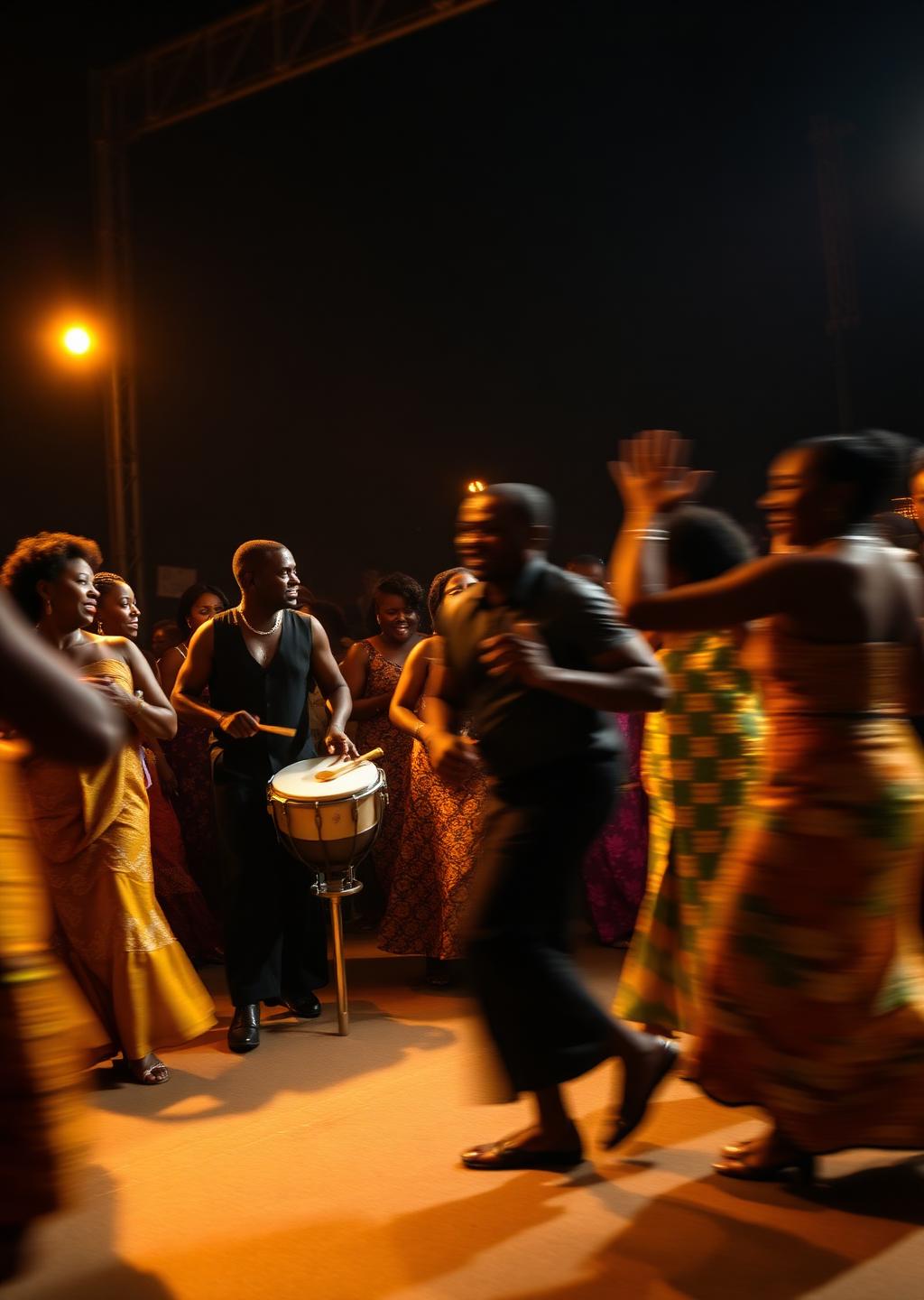
Guests dancing in motion blur under warm stage light

Guides

Everything the great hosts already know.

Lesson one

The anatomy of an evening

Tap any hour. This is the shape almost every memorable celebration secretly follows.

17:00

Arrival

Music low, drinks in hand within 90 seconds of the door. Nobody should have to look for anything.

Lesson two

Where the money actually goes

Drag the food allocation. Watch what has to give. There is no free money in a celebration — only trades you choose on purpose.

Food & drink at 26% leaves 74% for everything else.

Food
Venue
Photo
Design
Music
Spare

Lesson three

Five laws of a night people remember

01

Comfort beats spectacle

Guests forgive a modest room. They never forgive being hot, hungry, or lost.

02

One moment, well built

A single designed moment outperforms twelve nice ones. Choose it early, protect its budget.

03

Silence is a tool

Not every minute needs a microphone. Space lets people actually talk to each other.

04

Elders set the tone

Seat them where they can see and be seen. Everything downstream is easier.

05

Someone else runs the day

The host who is managing is not celebrating. Hand the timeline over completely.

The whole book

Twelve rooms. Each one opens where you plan.

Nothing here is a download. Every passage below appears again inside the matching chapter of your planning, at the moment the decision is made.

01 · Hall of First Dreams

Meaning before money

Before a single vendor is called, the family must be able to finish one sentence: “When this day is over, we want people to feel ___.” Every celebration that lost its way lost it here, not at the budget.

A celebration without a sentence becomes a shopping list.

Use this in your plan
02 · Treasury of Possibilities

The ceiling is a kindness

Money spent late costs more than money spent early — in cash and in peace. Set the ceiling before the dreaming widens, ring-fence ten per cent you refuse to touch, and write down every promised contribution.

A ceiling set early protects the family. A ceiling discovered late divides it.

Use this in your plan

03 · Circle of Families

Plan for who arrives

Invitations are not attendance. In most family celebrations, seventy to eighty-five per cent of invited households arrive, and they arrive with people you did not count. Plan hospitality for the real room.

Guests forget the décor. They never forget being hot, hungry, or lost.

Use this in your plan

04 · Makers' Quarter

The venue sets the ceiling

The room decides the guest count, the caterer's access, the sound, the light and the exit. Walk it at the hour your celebration will happen — not at noon on a quiet Tuesday.

Never sign for a space you have not seen at the same time of day.

Use this in your plan

05 · Feast Pavilion

Food is the most discussed decision

Long after the speeches fade, the room will talk about whether there was enough, whether it was hot, and whether the back tables were forgotten. Serve generously, serve on time, and never serve the back of the room last.

Generosity at the table buys forgiveness everywhere else.

Use this in your plan

06 · Grand Stage

Energy is designed, not hoped for

Sound decides whether people stay. Open the floor before the energy crests, keep the microphone in trained hands, and give the room deliberate silences so people can actually speak to one another.

Not every minute needs a microphone.

Use this in your plan

07 · Gallery of Memories

The day ends; the images do not

Family photographs are the only part of the celebration that will still be working in thirty years. Name the fifteen frames you must own — the elders, the parents, the hands, the doorway — and hand the list to someone who will chase them.

Unlisted photographs are unmade photographs.

Use this in your plan

08 · Hall of First Dreams

One strong idea, done fully

Restraint reads as wealth. A single material, colour or motif carried through the invitation, the room and the table will always outperform five competing ideas bought in a hurry.

One idea done well beats five ideas done thinly.

Use this in your plan

09 · Circle of Families

The ceremony is the reason

Rites, prayers and blessings are the spine of the day; everything after them is hospitality. Rehearse the order with the elders, and protect the ceremony from the schedule pressure of the reception.

Elders set the tone. Seat them where they can see and be seen.

Use this in your plan

10 · Feast Pavilion

Build the spine of the evening

A reception without a spine becomes a long wait between courses. Arrival, seating, welcome, dinner, the one designed moment, dancing — six beats, each with an owner and a length.

One moment, well built, outperforms twelve nice ones.

Use this in your plan

11 · Storm Chamber

The last thirty days are for confirming

Every failure on the day traces back to something unconfirmed in the final month. Re-confirm in writing: arrival times, quantities, power, payments and the person who answers the phone at 6am.

The last thirty days are for confirming, not deciding.

Use this in your plan

12 · Grand Stage

Hand it over and be present

A host who is managing is not celebrating. Give the timeline, the payments and the phone to someone capable, and spend the day inside your own celebration.

Someone else runs the day.

Use this in your plan
Candlelit table setting at dusk

Knowing is lovely. Doing is better.

Open the journey